
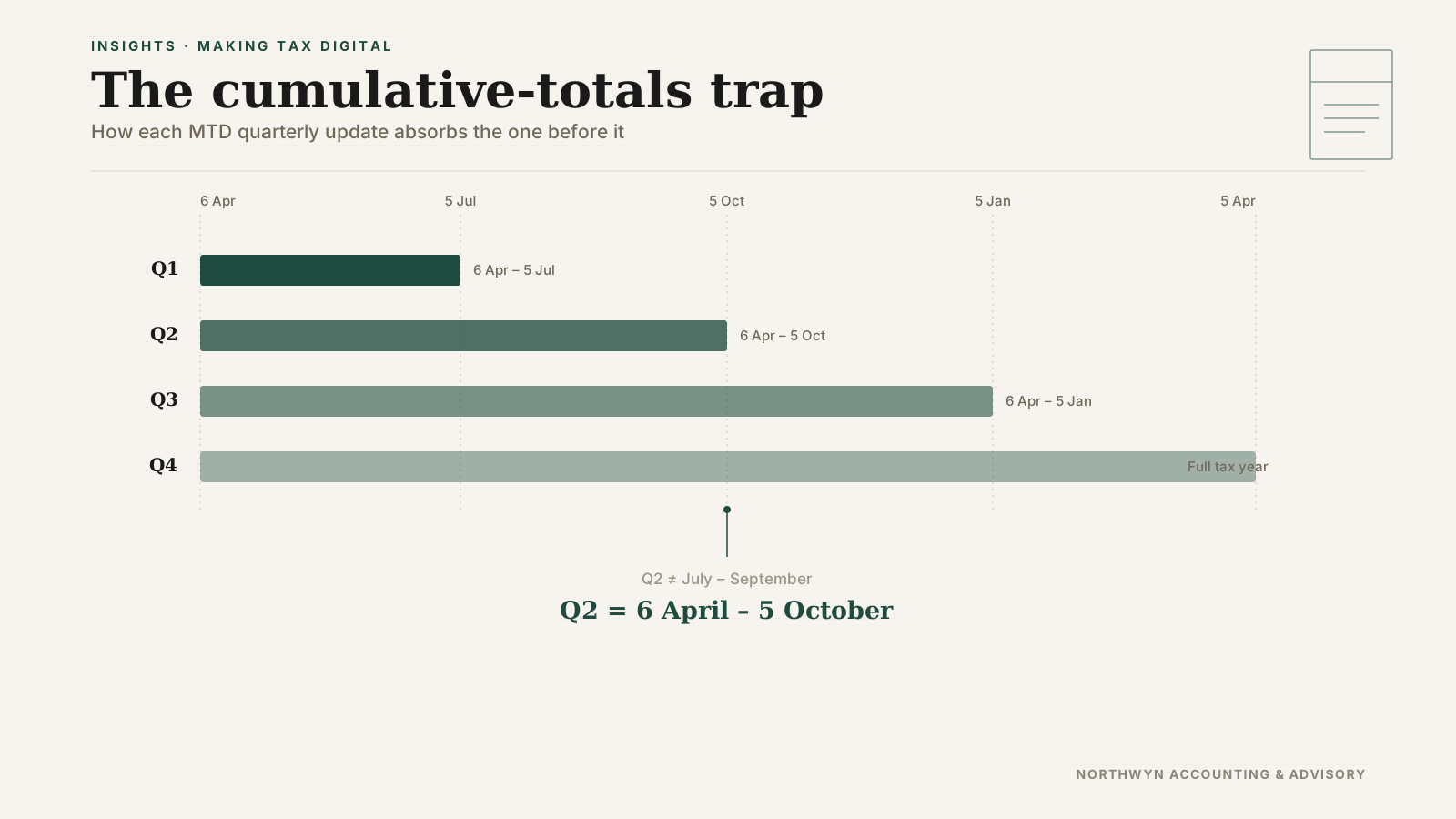
The first MTD deadline has passed. The bigger risk now is whether Q2 is being built correctly.
Most of what has been written about the first MTD for Income Tax quarterly deadline covered the same ground: who is in scope, what the dates are, and which software to use. Useful, but it is not where the practical risk sits.
The thing I have had to explain more than anything else is this:
Quarterly updates are cumulative, not standalone.
Why this trips people up
Every instinct from twelve years of annual Self Assessment says a “Q2 update” should mean July, August and September. It does not.
For a standard tax-year update, Q1 covered 6 April to 5 July. Q2 covers 6 April to 5 October — so it includes Q1 again, plus the activity from the second quarter. Q3 then builds on that, and Q4 covers the full tax year. That distinction matters because the figures HMRC receives are year-to-date totals, not three-month snapshots.
There is an upside. If you identify an error in Q1, you do not generally need to resend the previous update. You correct the underlying records and the corrected cumulative position flows through the next update.
The risk is the other side of that: if your software or process treats Q2 as a standalone three-month period, you are not simply missing some information. You are submitting the wrong cumulative position. And HMRC’s system is not there to tell you that your bookkeeping logic is wrong — it will accept a confidently wrong number as readily as a right one.
Multiple income sources are another easy trap
A client with both self-employment and property income does not have one combined quarterly update. The different income sources are reported separately, and it is easy to file one and assume the job is done.
Take a landlord with a full-time consultancy business, two rented flats in Manchester, and a holiday let in Portugal. That is three separate reporting obligations, not one: the self-employment business, the UK property business (which can bundle the two Manchester flats together), and a separate foreign property business for the Portuguese let, which is not combined with the UK properties even though both are “property income” on a Self Assessment return. Submitting the self-employment quarterly update and calling it done leaves two more obligations unmet — quietly, because nothing in the process forces you to notice the gap.
That matters because “I’ve done the MTD update” may not mean the client’s full MTD position has actually been reported. It is worth treating this as a checklist item per client, not an assumption you make once and carry forward.
What the 2026/27 soft landing covers — and doesn’t
HMRC has confirmed that no penalty points will be issued for late quarterly updates during 2026/27. That is useful breathing room in year one, but it is a concession on timing, not on accuracy — and that is exactly the gap this piece is about. Being late with a correct cumulative figure costs you nothing this year. Being on time with the wrong cumulative figure is not something the soft landing touches at all.
Specifically:
- It does not remove the requirement to send the quarterly updates.
- It does not remove penalties for a late tax return or late payment.
- All required quarterly updates must be sent before the MTD tax return can be submitted.
For the 2026/27 year, the remaining quarterly deadlines are 7 November 2026, 7 February 2027 and 7 May 2027.
What I would check before Q2
If you are filing for clients, this is the short checklist I would use:
1. Check the update period. Make sure the software is reporting the correct cumulative period — not simply the latest three months.
2. Reconcile Q1 before building Q2. If Q1 was estimated or subsequently corrected, make sure the underlying records now reflect the best available position.
3. Check every income source. Self-employment, UK property and foreign property may have separate reporting requirements. Do not assume one submitted update covers everything.
4. Check the agent connection. For agent-filed clients, make sure the relevant authorisation and MTD access are actually live before submission day.
5. Do not wait for perfect records. The objective is an accurate cumulative position based on the information available, with errors corrected through the records and subsequent updates where necessary.
None of this is complicated once it is understood. But the cumulative nature of MTD is easy to miss precisely because the deadlines are quarterly while the numbers being reported are not.
Q2 is not another three-month return. It is an updated view of the year so far.
That is the distinction I would want every first-cohort client — and every adviser filing for them — to have clear before 7 November.
Ramoni Tijani ACA is founder of Northwyn Accounting & Advisory, a Brighton-based chartered accountancy practice working with sole traders, landlords and directors on MTD implementation and year-round compliance.